


Nuclear Quantum Effects Reshape Solid-State High-Harmonic Generation via Attosecond Decoherence
Date:07-05-2026 Print
Scientists have uncovered a fundamental quantum mechanism that explains a long-standing puzzle in ultrafast physics, e.g., high-harmonic generation (HHG): why electrons in solids lose their coherent behavior far more quickly than expected?
High-harmonic generation, a process where intense laser pulses interacting with a material produce new light frequencies at multiple energies of the original laser, is a cornerstone of attosecond science. It provides a unique window into electron dynamics on their natural timescale. However, a persistent discrepancy rises between theory and experiment. To correctly model solid-state HHG spectra, researchers have had to assume an extremely fast electronic dephasing time of a few femtoseconds—an order of magnitude shorter than what conventional measurements of electron scattering and carrier lifetimes would suggest.
In a study published in Science Advances, researchers from the Institute of Physics (IOP) of the Chinese Academy of Sciences have identified that nuclear quantum effects (NQEs) can be the primary source for this ultrafast decoherence. The team led by Prof. Sheng MENG demonstrated that the zero-point motion of atoms—a purely quantum effect where atoms vibrate even at absolute zero temperature—is not a passive background; rather, it actively drives the electronic system toward a unique statistical ensemble through electronic-nuclear entanglement.
Using the hydrogen-based superconductor H₃S as a model system, the researchers showed that the strong delocalization of light hydrogen nuclei creates a quantum link with the electrons, which causes the electronic coherence to vanish on attosecond timescale. The nuclear motion also switches the dominant HHG mechanism from an interband process, which relies on electron-hole pair recombination, to an intraband process, which is driven by the motion of charge carriers themselves.
This switch provides measurable signatures in the harmonic spectra. The researchers found that by including NQEs, a phenomenological dephasing time is no longer needed to reproduce the clean harmonic peaks observed experimentally. The effect also changes the intensity dependence of high-order harmonics upon electron doping, a direct and testable prediction. By analyzing time-frequency spectrograms of the emitted harmonics, the team proposed a method to directly extract the electronic decoherence time and gauge the width of the nuclear wave packets in a material.
The study further reveals a relationship among nuclear delocalization, decoherence time, and the material's atomic mass and vibrational frequency. This suggests the phenomenon is broadly applicable and not limited to a single material.
"This work suggests that high-harmonic generation is not just a tool for observing electron dynamics, but also a quantum probe of the entangled electron-nuclear system itself," said Prof. Sheng MENG, the corresponding author. "We believe it potentially opens new avenues for probing quantum coherence in complex materials and may impact future developments in quantum technology and ultrafast optoelectronics."
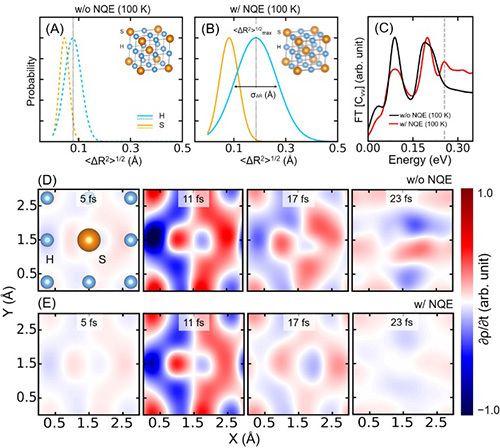
Fig.1 The nuclear quantum effects in hydrogen-based superconductor Im-3m H₃S. (Image by Institute of Physics)
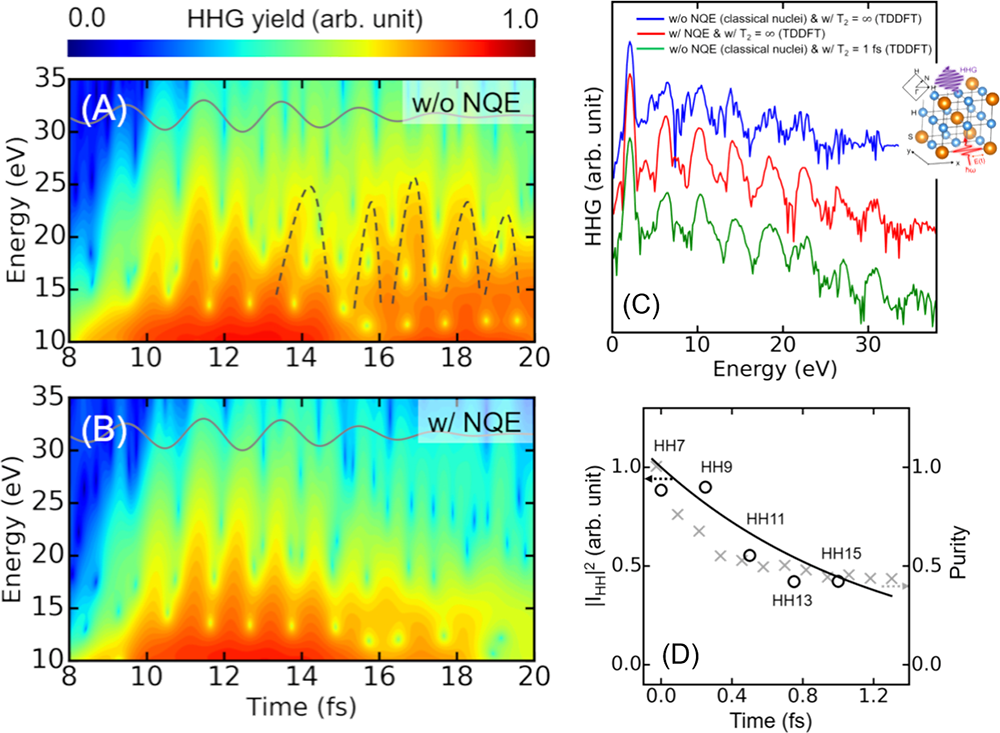
Fig.2 The NQE-induced decoherence dynamics in HHG. (Image by Institute of Physics)
Contact:
Sheng MENG
Institute of Physics, Chinese Academy of Sciences
Email: smeng@iphy.ac.cn
Key words:
High-harmonic generation; Attosecond physics; Nuclear quantum effects; Electronic coherence; Nuclear-electronic entanglement
Abstract:
Researchers demonstrate that nuclear quantum effects induce ultrafast electronic decoherence in solids via nuclear–electronic entanglement. This mechanism reshapes high-harmonic generation by suppressing interband processes and enabling direct probing of coherence time through spectroscopy.