


Kesterite Solar Cells Realize 15.1% Record Efficiency that Exceeds Industrialization Threshold
Date:20-03-2026 Print
As the global demand for clean energy continues to grow, developing low-cost solar cells has become an important goal in photovoltaic research. Kesterite solar cells based on Cu₂ZnSn(S,Se)₄ (CZTSSe) have therefore attracted broad attention because they have a series of advantages, such as earth-abundant and non-toxic element compositions, high chemical stability and radiation hardness, low-cost processing routes and excellent industrial compatibility. Its tunable direct bandgap also makes it highly suitable for ultra-efficient, all-thin-film tandem photovoltaic devices for space energy systems. These unique advantages have drawn strong interest from research and industry teams across the world. However, due to complex defect properties, this thin-film photovoltaic technology has faced a global bottleneck since 2013, with device power conversion efficiency largely stagnating.
Understanding the defect physics of this photovoltaic material system, clarifying the mechanisms behind defect formation, and developing targeted strategies to suppress them have become central goals for scientists worldwide. However, the system's inherent complexity has made progress extremely challenging, causing many teams across different countries to withdraw. The team led by Prof. Qingbo Meng at the Institute of Physics, Chinese Academy of Sciences (IOPCAS), however, persisted. During 2023–2024, they succeeded in identifying the key defect types in this material system and uncovered the atomic-scale mechanisms behind their formation. By regulating the atomic dynamics of crystallization reactions, they achieved efficiency breakthroughs of 13% and 14% in CZTSSe solar cells (Nature Energy 2023, 8, 526; Nature Energy 2024, 9, 1095), effectively breaking the decade-long bottleneck in this field.
15% efficiency is widely regarded as a key benchmark for determining whether a photovoltaic technology has real potential for commercialization. After leading the field into the 14% era, the IOPCAS team set its sights—along with researchers worldwide—on surpassing this critical 15% threshold. Building on years of persistence, the IOPCAS team once again took the lead. In April 2024, they became the first in the world to achieve a certified efficiency exceeding 15%, reaching 15.1%. This result set a new world record for CZTSSe solar cells and was officially recognized by leading international photovoltaic statistics (https://www.nlr.gov/pv/cell-efficiency).
Most recently, the team reported the key strategies and techniques behind this record-breaking result. They first found, from the material preparation perspective, that unbalanced phase evolution during selenization crystallization of CZTSSe plays a key role in causing defect formations. Specifically, they showed that the formation of CZTSSe involves the combination between ZnSe and Cu₂SnSe₃ (CTSe); however, ZnSe forms earlier than CTSe during the reaction. This delay allows ZnSe to accumulate before CTSe appears. As ZnSe continues to grow, its reactivity decreases. That makes it harder for ZnSe and CTSe to react efficiently into the final CZTSSe phase, increasing the likelihood of Zn-related substitution defects such as SnZn and CuZn (Figure 1).
To address this problem, the team then introduced activated Na-Se species into the selenization process. These species promoted CTSe formation at lower temperature and brought CTSe and ZnSe into a more synchronized evolution pathway. The more balanced phase evolution reduced Zn segregation and ultimately lowered defect density in the absorber. These improvements translated into better device performance. The champion device reached 15.5%, and an accredited third-party laboratory certified it at 15.1% (Figure 2). By surpassing the 15% level widely regarded as important for commercialization potential, the study highlights a practical route toward more competitive kesterite solar cells and related thin-film photovoltaics.
This study entitled "Suppressing defects in Kesterite solar cells via balanced phase evolution to enable 15.1% certified record efficiency" was recently published on Joule.
The study was supported by the National Key R&D Program of China, the National Natural Science Foundation of China, the China National Postdoctoral Program for Innovative Talents, the Zhejiang Provincial Natural Science Foundation, and the Youth Innovation Promotion Association of the Chinese Academy of Sciences.
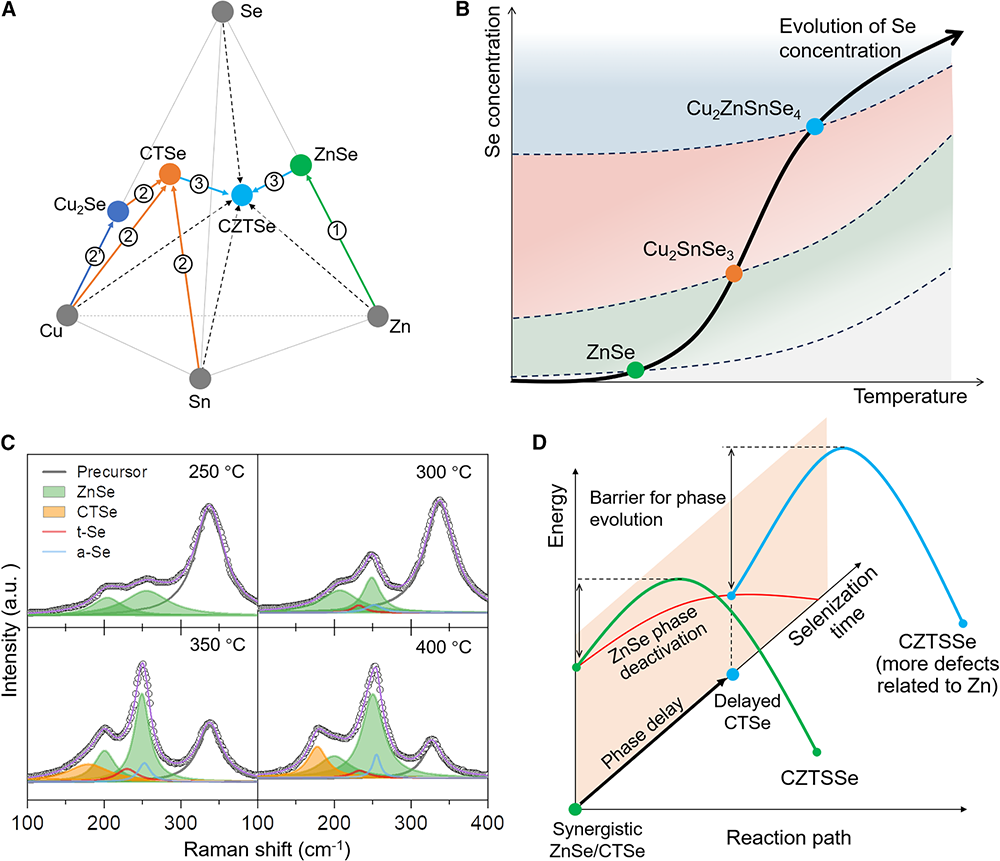
Figure 1. Correlation between unbalanced phase evolution and defect formation. (Image from IOPCAS)
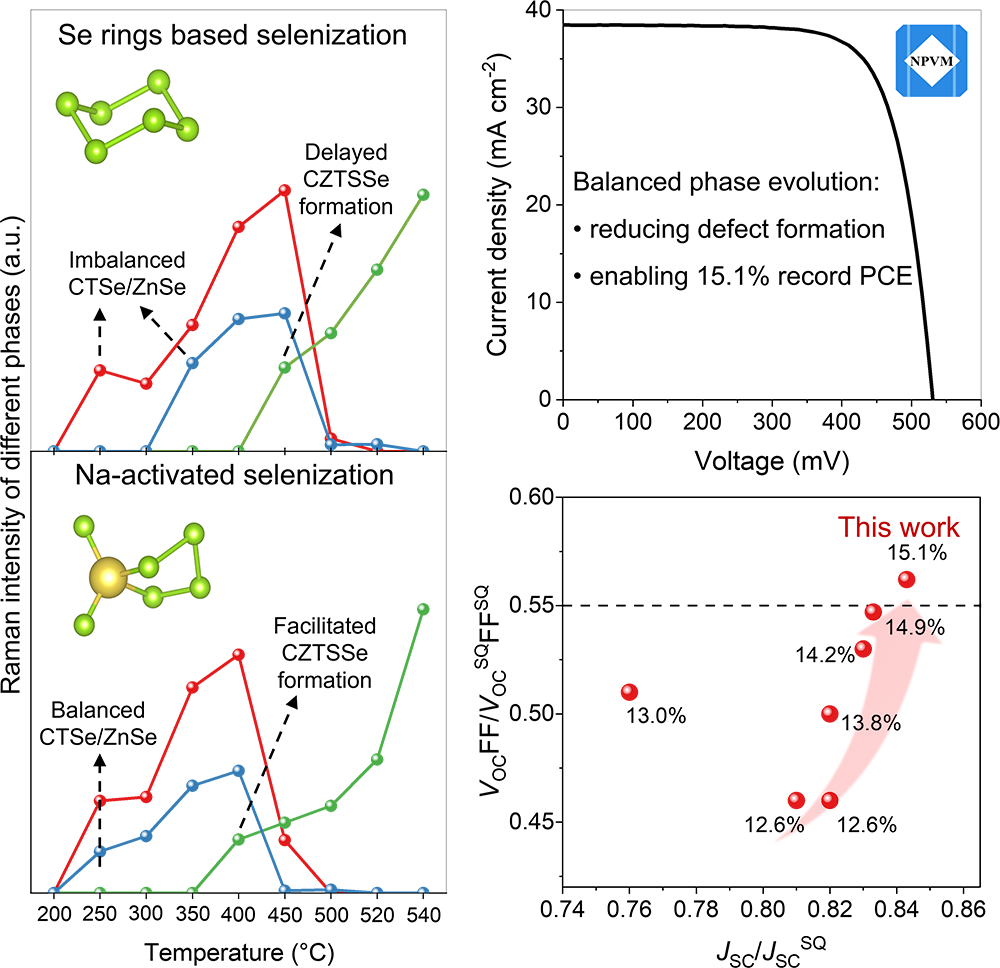
Figure 2. Sodium-activated selenization balances phase evolution and improves kesterite solar cell efficiency. (Image from IOPCAS)
Contact:
Institute of Physics
MENG Qingbo
Email: qbmeng@iphy.ac.cn
Key words:
Kesterite solar cells; Phase evolution; Defect suppression
Abstract:
The team in Institute of Physics, Chinese Academy of Sciences reported the first realization of certified record efficiency exceeding 15%, reaching 15.1%, in CZTSSe thin-film solar cells through balancing phase evolution, clearing a key commercialization benchmark.