


Flexible CZTSSe Photovoltaics Realizes a New Performance Record
Date:30-03-2026 Print
Recently, the international academic journal Nature Energy published online the latest research progress made by the research team led by Meng Qingbo from the Institute of Physics, Chinese Academy of Sciences, in the field of flexible inorganic thin-film photovoltaics. Focusing on the key scientific challenge of regulating complex phase separation in multinary chalcogenide materials, the study proposes a new mechanism based on kinetic competition control, achieving systematic breakthroughs in the efficiency of flexible CZTSSe solar cells and photovoltaic modules.
With the rapid development of wearable electronics, distributed energy systems, and curved or integrable photovoltaic technologies, lightweight and bendable flexible photovoltaic devices are becoming an important direction in next-generation energy technologies. Cu2ZnSn(S,Se)4 (CZTSSe) is an emerging inorganic thin-film photovoltaic material composed of earth-abundant and environmentally benign elements. Combining low-cost potential with excellent mechanical flexibility, it is widely regarded as a promising candidate for future portable energy and space energy applications.
Despite its significant advantages in elemental composition and application prospects, improvements in the photovoltaic performance of this material system have long faced an international bottleneck. Since the early 2010s, when overseas research groups pushed device efficiencies to approximately 12–13%, further progress stagnated for nearly a decade. The fundamental cause lies in the complex defect physics inherent in multicomponent semiconductor systems. Therefore, achieving orderly phase evolution and coordinated defect regulation during crystallization has become the core scientific challenge limiting further performance enhancement of this photovoltaic material.
To address this challenge, the research team at the Institute of Physics, Chinese Academy of Sciences, has conducted sustained and systematic investigations, establishing a comprehensive understanding of crystallization kinetics, atomic ordering, and defect evolution in CZTSSe materials. Building on long-term technological advances, the team has achieved successive efficiency breakthroughs of 13%, 14%, 15%, and 16% over the past five years, revitalizing global research interest in this material system. Their record-setting device efficiencies have been listed four times in the Best Research-Cell Efficiency Chart maintained by the National Renewable Energy Laboratory (USA, now renamed the National Laboratory of the Rockies), and ten times in the internationally recognized Solar Cell Efficiency Tables edited by Professor Martin A. Green and multiple photovoltaic experts across the world.
With continuous efficiency breakthroughs being achieved in rigid devices, the team has simultaneously being focusing on lightweight and flexible CZTSSe photovoltaic devices that can satisfy more diversified application demands. Through sustained efforts, they successively realized multiple performance advances in flexible CZTSSe solar cells. In their latest study, the researchers systematically elucidated the differentiated roles of alkali metal elements during the crystal growth of flexible CZTSSe thin films. The results show that conventional sodium (Na) incorporation can promote grain growth and improve film morphology; however, it also induces large-scale segregation intermediate phases. To overcome this limitation, the team proposed a "kinetic competition control" strategy by introducing lithium (Li) to modulate the free-energy landscape of this material system, which enables coordinated and orderly evolution of the multiphase system, suppressing phase separation and improving CZTSSe film quality.
Based on this mechanistic breakthrough, the research team achieved a power conversion efficiency of 14.5% (certified at 14.2%) for flexible solar cells, setting a new efficiency record for this class of devices. Furthermore, they demonstrated shingled flexible CZTSSe photovoltaic modules, attaining a power conversion efficiency of 12.7% (certified at 12.0%). This result not only surpasses the module efficiency record held for more than a decade by Japan's Solar Frontier but also marks the first time that flexible CZTSSe modules have outperformed their rigid counterparts. The certified results have been collected in Solar Cell Efficiency Tables (Version 66).
This work deepens the fundamental understanding of crystallization behavior in complex multinary semiconductors from the perspective of microstructural regulation, providing a new theoretical framework and technological pathway for the orderly growth of multiphase functional materials. The findings not only advance flexible inorganic thin-film photovoltaic technologies but also offer important scientific support for the future development of high-performance integrable energy systems.
This study entitled "Alkali-metal-mediated control of phase segregation for flexible kesterite solar cells and modules with improved efficiency" was published on Nature Energy.
This work was supported by the National Key R&D Program of China, the National Natural Science Foundation of China, the Zhejiang Provincial Natural Science Foundation, the China National Postdoctoral Program for Innovative Talents and the Youth Innovation Promotion Association of the Chinese Academy of Science.
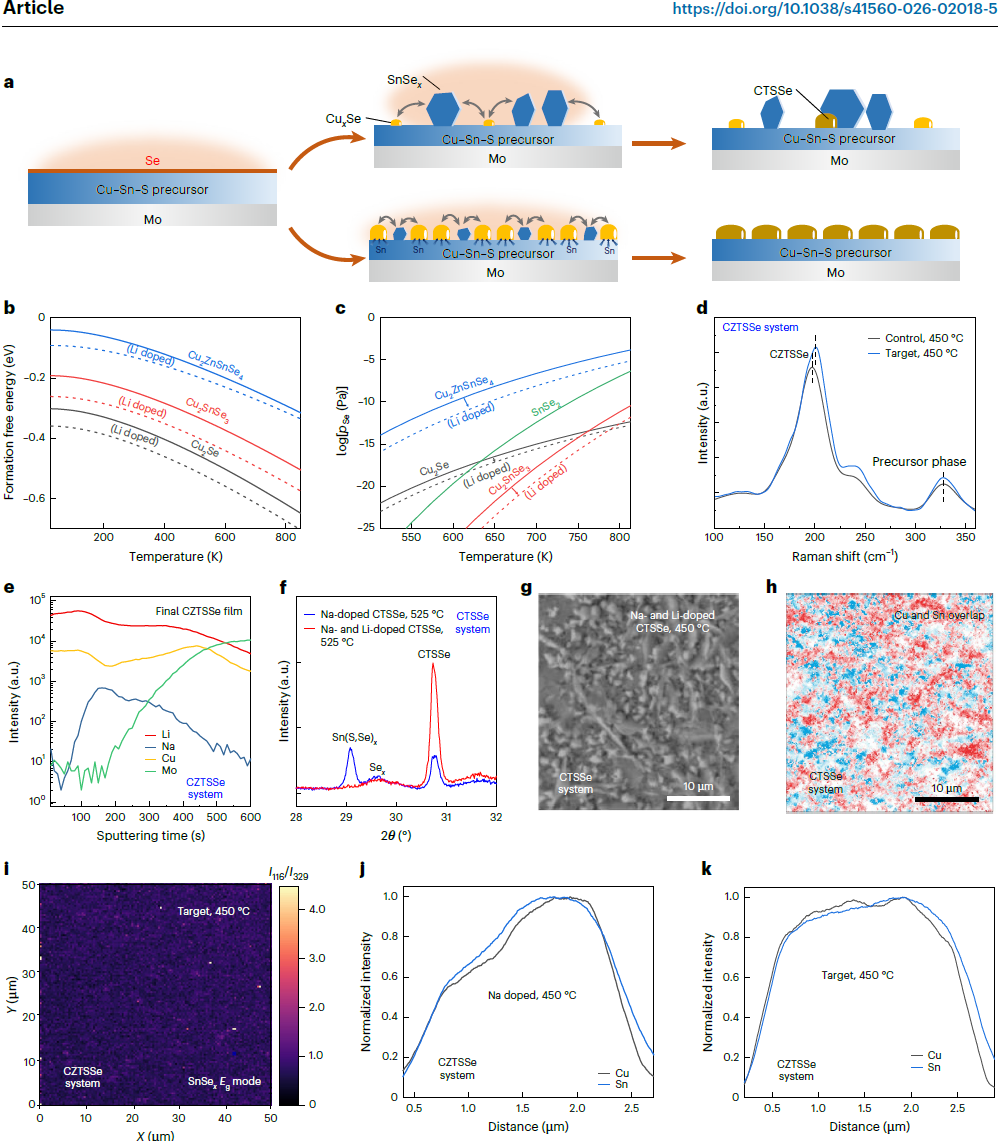
Fig. 1. Synergistic regulation by alkali metals suppresses large-scale phase separation. (Image by Institute of Physics)
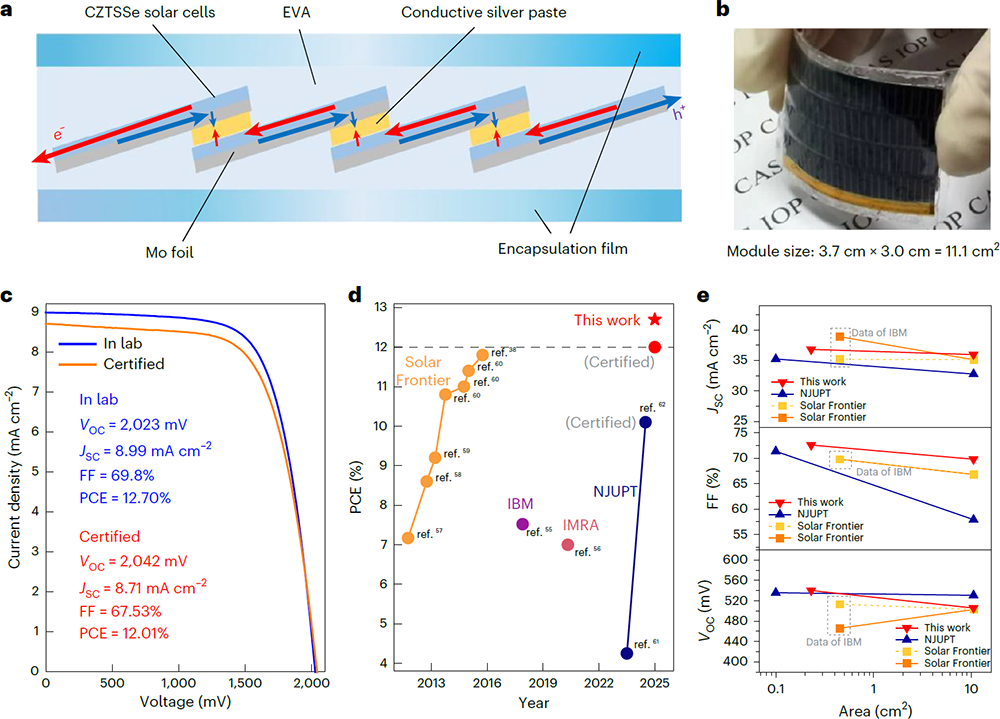
Fig 2. Flexible CZTSSe shingled module with a certified record power conversion efficiency of 12.0%. (Image by Institute of Physics)
Contact
Institute of Physics, Chinese Academy of Sciences
Email: qbmeng@iphy.ac.cn
Abstract
Researchers from Institute of Physics, Chinese Academy of Sciences report a performance breakthrough in flexible emerging thin-film solar cells, CZTSSe, setting a new record for this field. This achievement is realized by a mechanistic clarification of alkali-metal effects in CZTSSe and the development of kinetic-competition strategy to regulate phase segregation in this material system.
Keywords
Flexible thin-film photovoltaics; kesterite solar cells; CZTSSe