


Scattering Framework Reveals Topological Resonances at Quantum Time Boundaries
Date:22-09-2026 Print
Light can reflect or transmit when it reaches an interface between two materials. Quantum waves can also encounter boundaries in time when a system's properties change. A unified description of scattering at these temporal interfaces has been lacking.
HU Haiping of the Institute of Physics, Chinese Academy of Sciences, has developed a framework for quantum scattering at time boundaries. The study was published online on September 18, 2026, in Proceedings of the National Academy of Sciences (PNAS).
The framework treats a time boundary as a scattering interface between two quantum phases. It introduces a temporal scattering matrix to describe how quantum states cross the boundary, covering both abrupt changes and finite-duration modulation.
A central prediction is topological resonant transmission. At resonance, a suitable state transfers completely from the initial valence-band subspace to the final conduction-band subspace. The framework applies to multiband systems.
The protected resonance count is determined by the change in band topology across the boundary. This bulk-time-boundary correspondence links the global properties of quantum phases to their temporal scattering. In one dimension, a time-domain version of Levinson's theorem connects the resonance count to scattering phases.
Resonance stability also depends on spatial dimension. In the even-dimensional classes studied, resonances survive symmetry-compatible temporal modulation; in odd dimensions, dynamical symmetry breaking can remove them. Numerical calculations also demonstrate robustness against moderate disorder.
Illustrative simulations show dynamical freezing, in which internal-state oscillations stop after the boundary, and resonant wave packets that propagate without splitting. These effects offer observable signatures for controlling quantum states and probing topology in ultracold atoms and photonic systems.
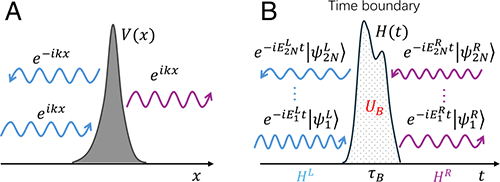
Fig. 1. Wave scattering at spatial and temporal boundaries. (Image by Institute of Physics)
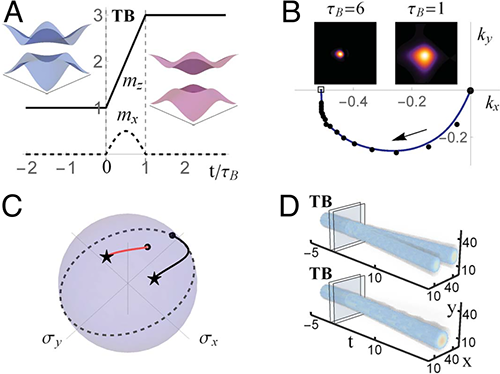
Fig. 2. Resonant Transmission and Quantum Dynamics featuring dynamical freezing. (Image by Institute of Physics)
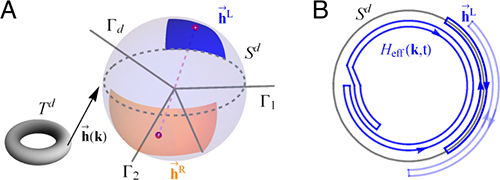
Fig.3 Topological origin of resonant transmission. (Image by Institute of Physics)
Contact:
HU Haiping
Institute of Physics, Chinese Academy of Sciences
Email: hhu@iphy.ac.cn
Abstract:
A quantum scattering framework links time boundaries to band topology and predicts complete transfer between valence and conduction subspaces in multiband systems. It identifies how spatial dimension affects resonance stability. Simulations also illustrate dynamical freezing and wave-packet propagation without splitting, suggesting ways to control quantum states and detect topological phases through changes in time in experimentally accessible quantum platforms.
Keywords:
time boundaries; quantum scattering; topology; resonant transmission; quantum control